I felt it the moment we walked into the house.
Everything was different and yet it was all the same. We opened the front door carrying an 8 pound human being and our whole world had changed.
Except, there was my daughter playing on the same rug, in the same room.
The furniture and the smell and the toys and the clutter and the sound of the furnace humming.
The sun hit the same spots in the living room and everything was just as it used to be.
It was all the same, except everything was different.
The emotions hit hard and they hit fast. I held them in and pushed through.
I escaped with my almost 3 year old to her room to play like we used to. How could 4 days ago be the old days? It might as well have been 100 years.
Tears welled and the lump in my throat grew harder to ignore. We played as I held them back. The world I had built with her in our small home felt like it had shattered.
“I love you playing with me,” she said softly.
I started weeping.
That’s where it began.
Even writing about that time, the first few days after bringing my second baby home, makes my stomach churn a little. I can barely look back on pictures of my newborn son without feeling the overwhelming darkness that hung like a cloud over me.
I began to unravel the first night home with the baby. Maybe the nurses in our recovery room would argue it started before, after they came in to me sobbing, unable to sleep a minute for the second night in a row.
It had been 3 days of almost zero sleep. It was sudden and intense shifts in hormones. It was the underlying mental health condition that had amplified during pregnancy.
I expected this and even prepared to struggle postpartum – but I knew right away something wasn’t right. This was different.
Within hours of being home, I felt the worst combination of dread, terror, panic and hopelessness.
I was trapped and all I knew for sure was that I couldn’t do it.
Everyone told me I could. My parents and my husband as they held me in absolute hysterics. The voices of my friends on the other end of the phone as I cried to them. My doctors. They said I could do it and I would feel better. I would feel better.
But I just knew I couldn’t. That I wouldn’t.
For 5 days I lived in a valley deeper than I had ever known.
“Why is Mommy crying?” was the most common phrase my daughter said.
The tears wouldn’t stop.
It looked like being physically held in the middle of the night when the darkness closed in the worst.
It felt like panic and showed up like nausea, head in the toilet, bracing my stitches from just giving birth as the heaving stretched and pulled them.
The inability to eat or feel any sort of happiness, even though the baby I longed and prayed for slept peacefully on my chest. I loved him! I did.
But the absolute and utter exhaustion. The inability to sleep. The fear of what this new life held.
While I saw many pictures of postpartum moms snuggling their brand new babies in “sleep deprived bliss,” I felt like I was in a nightmare.
I loved my baby. I felt torn between wanting to hide away in a room and just savor and smell and kiss him, and holding my daughter remembering our world before. If I loved him then why wasn’t I happy?
My parents essentially moved in for 9 days and helped take care of the baby and me. My mom forced me to eat and my sister came over after work. Close friends popped in with food and gifts and hugs and cards.
At this point, my son was eating every 2 hours on the dot all night long, so we divided the night into shifts, prioritizing my sleep. He was jaundice, not getting enough through him, and since my sleep had to be priority, friends dropped off breast milk so other people could bottle feed him.
The episode swooped in fast with intensity, but as a few days passed, I began turning a corner. Within a week, I was able to see the light again.
With some sleep, medication, professional help and support from my family and friends, I emerged.
The months that followed were not easy- my son had severe allergies and digestive issues and we struggled with feedings and sleep and vomit and COVID and ups and downs, but even in the tough parts, I stayed afloat. No “hard” those first few months even compared to what I walked through the first week of his life. I want to share a few important things to keep in mind if you or someone you know is dealing with any sort of Postpartum Mental Health situation. While it came and passed quickly for me, who knows how long it would have gone on without taking action.
- Do not delay in getting immediate medical attention.
I recently read about a mom on the East Coast who took her own life 9 days after giving birth to her twins. Postpartum Depression is a serious and dangerous condition that can occur quickly. The mind is not in its right place. Do not wait and see if even part of you wonders if what you are experiencing is normal. If your provider is not taking you seriously, find another. Do not suffer in silence. As someone with a history of mental health issues, I was fully expecting to struggle, but like I said, this came on quicker and with more intensity than I ever imagined. Quick action can be life saving. I had a great psychiatrist who moved quickly, a therapist who walked me through decisions about treatment and my OB’s office checking in. Again, this level of support is fortunate, but I had all of this set up and ready before having the baby. Feeling emotional is normal. Crying is normal. Feeling hopelessness and despair is not. Reach out.
2. Taking care of your mental health is taking care of the baby
I sobbed to my psychiatrist that I wanted to be able to take care of my own baby. I remember a moment that had happened right before that where my dad handed me the baby and told me something about what the baby preferred. It devastated me. Someone else at that moment knew my baby better than me. What kind of mother was I? I was sleeping and resting and in appointments while others lost sleep caring for my son. I felt so much guilt. But BECAUSE of the help I received, I am now happy and healthy and able to care for him and enjoy him.
Sleep is often the very first intervention given to Postpartum mothers struggling. Get the mom uninterrupted sleep. This is challenging for moms who want to exclusively breastfeed, as I did, but I am not sure what would have happened if I didn’t have others bottle feeding my baby so I could sleep.
3. Invest in and build community before crisis hits
I will never, as long as I live, forget the way people showed up for me. I have never been so grateful for my deep friendships who carried me through.
Along with the deep friendships, there were people that I hadn’t talked to in years gift me with meals, presents, and care baskets. It was absolutely overwhelming. I know how fortunate I am to have had family move in, in laws that came after, friends that dropped everything to get me back on my feet. I know I am blessed and that many mothers struggling do not have access to community at that level. Of course there are things out of our control, but there are resources you can reach out to ahead of time, Care teams at churches, small groups – doing those things ahead of time so you have support if needed is vital.
4. Talk to People who have gone through it
One of the most encouraging things when you’re in the pit, is talking to other Moms who were there too. Hearing people’s stories of PPD is so validating. If you have not gone through it, you truly have no idea the darkness that overwhelms you. I shared publicly early on what I was struggling with, and while there is some risk to that level of transparency, the benefits were so worth it as people felt comfortable reaching out with their stories. Reach out. Reach out. Reach out. You are not alone.
5. It can look different for everyone
PPD and PPA can look different and manifest differently in everyone. Even from pregnancy to pregnancy with the same Mom. With my daughter, I really struggled as well but it was more of a “low and slow” burn. It wasn’t until a year or so Postpartum I felt like myself again, whereas with my son it was fast and intense yet I recovered quickly. It can be panic or depression or sleeplessness or rage or irritability or obsessions or intrusive thoughts or a thousand other things. If something feels off, say something, even if it doesn’t fit the “mold” for PPD.
The week after my son was born was the darkest week of my life. It’s hard to revisit it. While each day still carries some chaos and exhaustion, there is much unspeakable joy. The love I have for my son is so deep and pure and I feel connected to him in such a profound way. I am filled with immense gratitude for his life and for the people who carried me through this season so I could experience this one now.
I am so grateful to be out of the darkness and into the light.
Out of the darkness, there is family ice cream night.
Play dates with friends.
The first sip of coffee after a long night.
Baby giggles that make you belly laugh.
Siblings playing.
Joy. There is so much joy here.
Here are two candid pictures of me, taken by other people. In the first, we were just days Postpartum and my husband was trying to capture the baby’s sweet sleep smile. In the background, you can see my hand on my face wiping away tears of sadness.
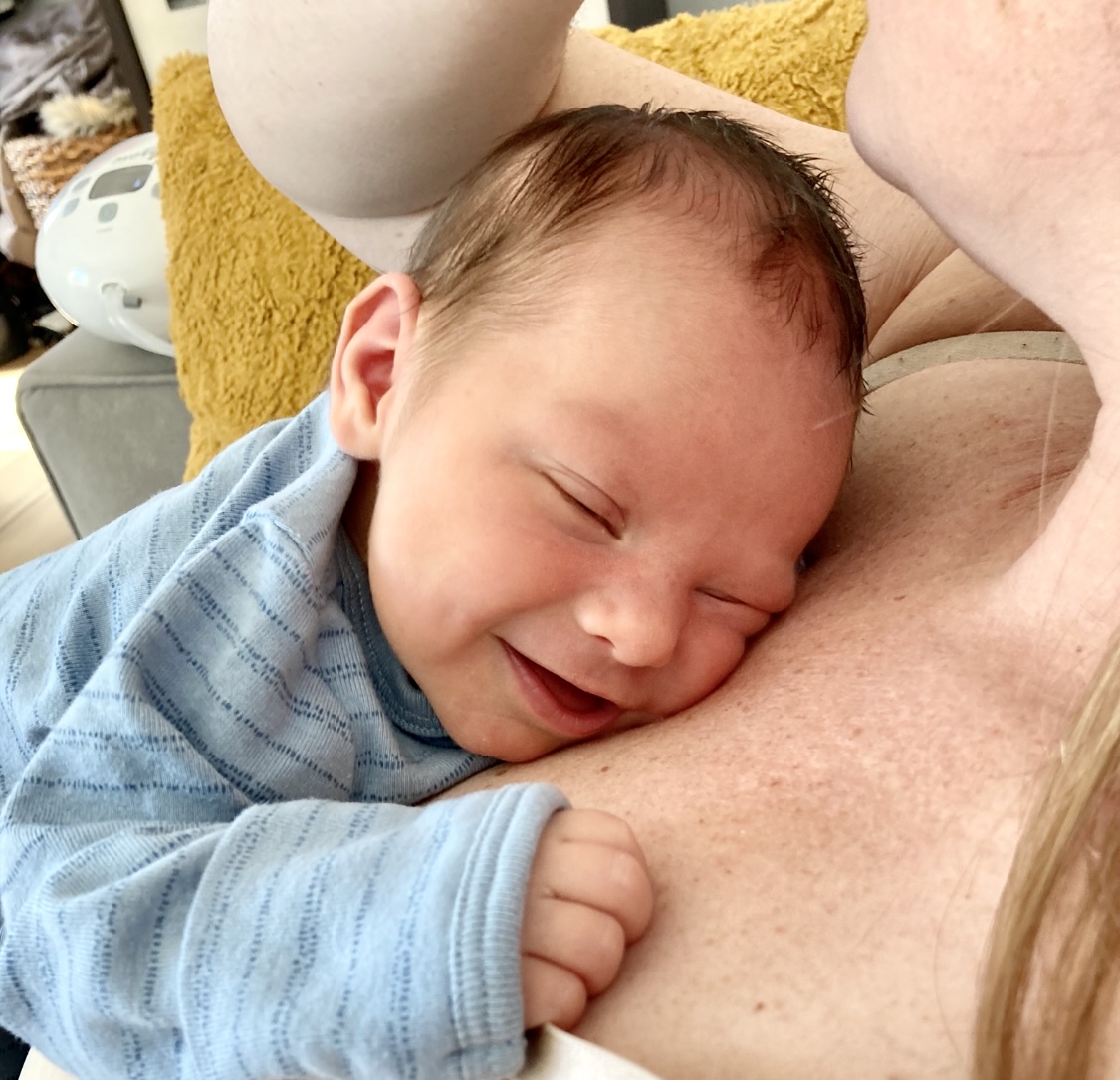
In the second, my daughter, a freelance paparazzi, took this blurry picture of me changing the baby and enjoying every minute of him. Deep, deep joy. Thank you Lord.

 Count Your Blessings, Not Your Chins.